
Laser Scanning for Museums & Cultural Institutions
Accurate documentation for sensitive, high-value spaces
Museums and cultural institutions require a careful balance between access, preservation, and precision. Public-facing galleries, historic interiors, and sensitive collections demand documentation methods that are accurate, non-invasive, and respectful of both the space and its contents.
MYND Workshop provides high-accuracy terrestrial LiDAR scanning and 3D documentation for museums, galleries, and cultural institutions, supporting renovation planning, exhibition design, conservation efforts, and long-term archival needs.

Scanning a work of art at The Metropolitan Museum of Art in New York, NY
Experience working in live, sensitive environments
Cultural institutions are rarely closed, empty spaces. Documentation often takes place in environments that are:
Open to the public
Containing fragile or irreplaceable works
Architecturally complex or historically significant
Subject to strict handling, lighting, and access requirements
Our workflow is designed to operate within these constraints, allowing capture to proceed efficiently while minimizing disruption to daily operations and ongoing programming.

Point Cloud of Beaux Arts Court at The Brooklyn Museum, Brooklyn, NY
Selected Institutional Experience
MYND Workshop has supported documentation and planning efforts for a range of major museums and cultural institutions, including the Smithsonian National Postal Museum, the Hirshhorn Museum and Sculpture Garden, The Metropolitan Museum of Art, The Met Cloisters, the Brooklyn Museum, the Toledo Museum of Art, and the The Explorers Club, among others.
These projects have involved a range of conditions — from public galleries and historic interiors to architecturally complex spaces — requiring careful coordination, discretion, and a measured approach to documentation.
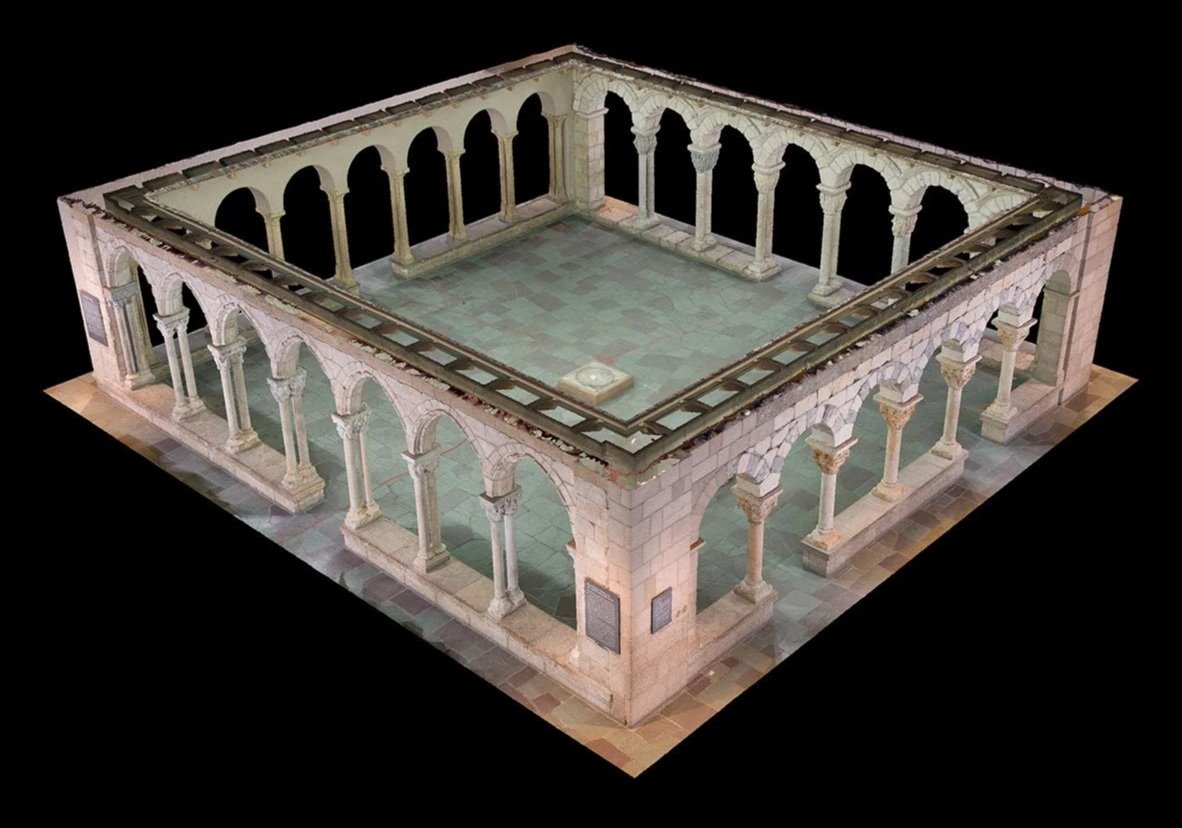
3D Textured Mesh of Cloister Room at the Toledo Museum of Art, Toledo, OH
Supporting preservation, planning, and exhibition work
We regularly collaborate with museum teams, architects, conservators, and exhibition designers to produce spatial documentation that supports a wide range of uses, including:
Existing conditions documentation for renovation and restoration
Accurate spatial reference for exhibition planning and layout
Digital records of galleries, interiors, and architectural features
Context capture to support conservation and archival efforts
Each project is scoped to align with the intended downstream use of the data, ensuring that documentation is both precise and practical.

Detail from Photogrammetry Capture of Column Capital at The Met Cloisters
Detail where it matters most
Museum environments often combine large public spaces with fine architectural detail, ornamentation, and layered modifications over time. Capturing this complexity requires careful planning, appropriate resolution, and a clear understanding of what information is most critical to preserve.
Our approach prioritizes reliable, repeatable spatial data that teams can trust when making design, conservation, and planning decisions.
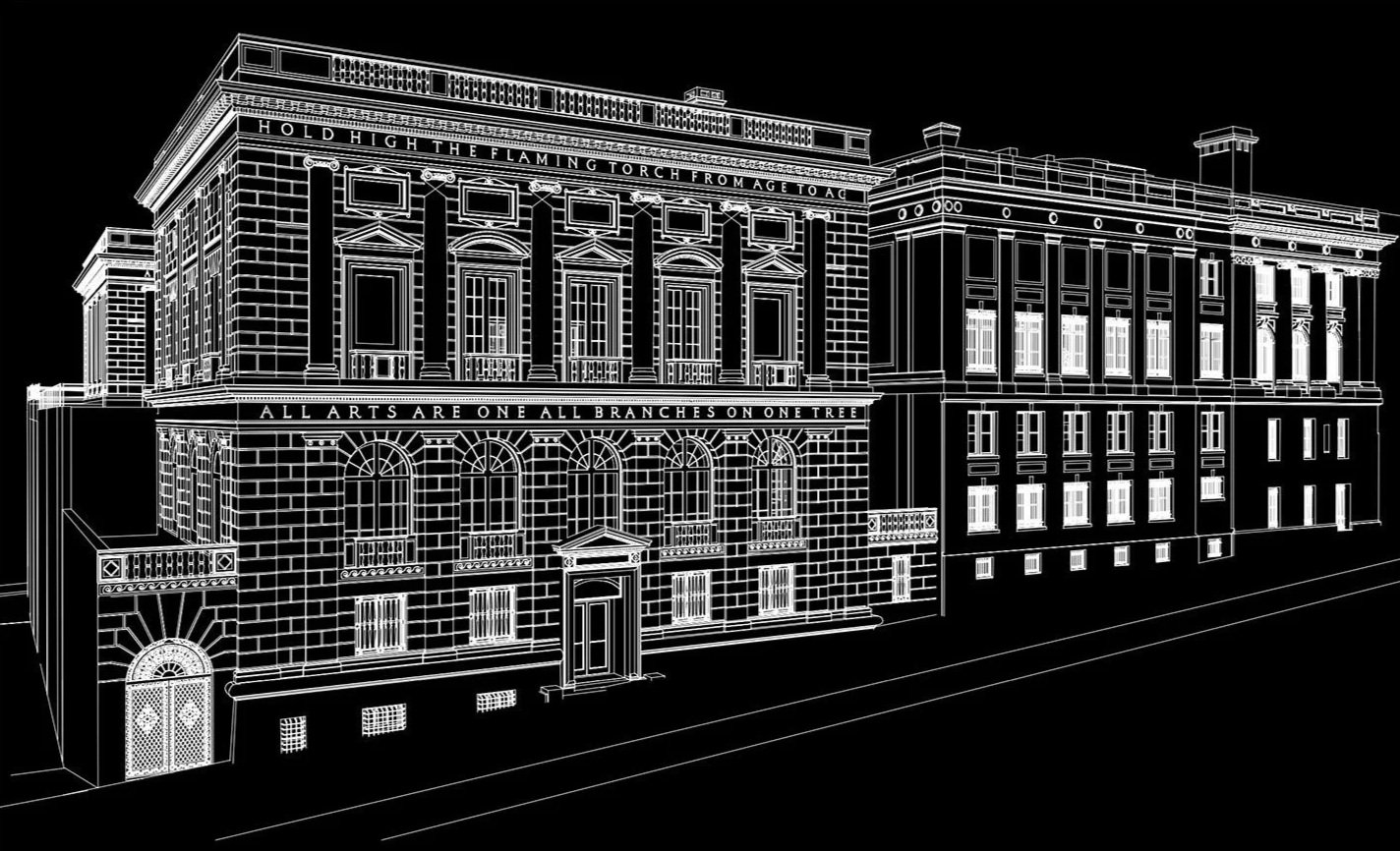
3D BIM (Revit) Model of Academy of Arts & Letters Facade, New York, NY
A measured, collaborative approach
Successful documentation in cultural institutions depends on coordination and communication. We work closely with institutional staff and project teams to define access requirements, capture priorities, and scheduling constraints in advance.
If you’re planning documentation, renovation, or exhibition work within a museum or cultural institution, we’re happy to discuss scope and access considerations early in the process.